Golden Cross vs Death Cross: How Traders Spot Trend Reversals
Learn how Golden Cross and Death Cross signals work, when they’re reliable, and how traders use them with RSI, MACD, and volume to spot trends.
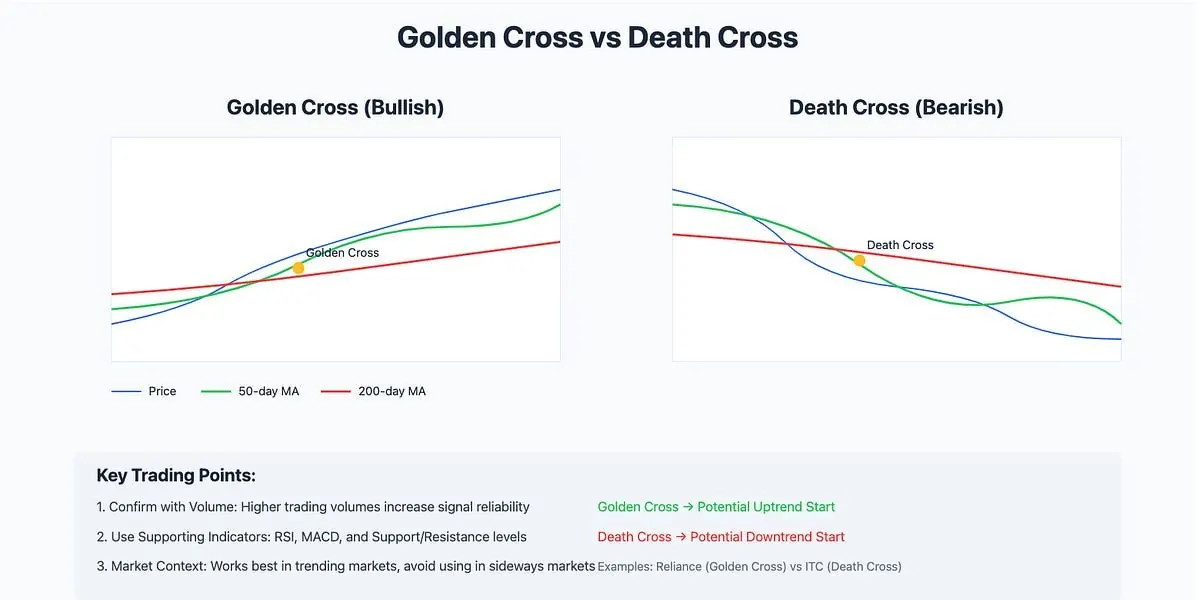
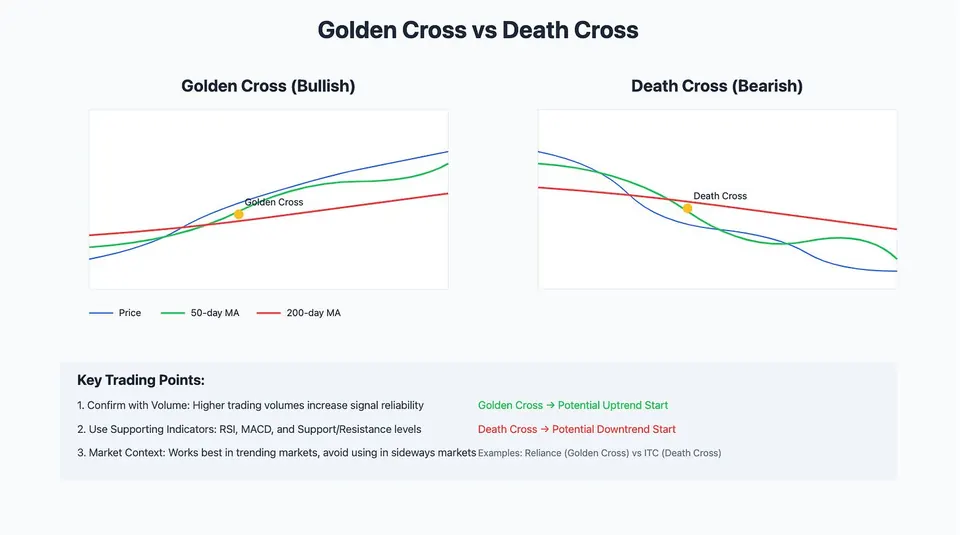
A Golden Cross occurs when a short-term moving average (e.g., 50-day MA) crosses above a long-term moving average (e.g., 200-day MA) from below.
It signals the start of an uptrend, suggesting that bullish momentum is building up.
Thanks for reading SAHI’s Substack! Subscribe for free to receive new posts and support my work.
A death cross happens when a short-term moving average (e.g., 50-day MA) crosses below a long-term moving average (e.g., 200-day MA) from above.
It signals the start of a downtrend—indicating that selling pressure might increase.
Step 1: Confirm the Crossover
-
Higher volume during the crossover = More reliable signal
Step 2: Pair with Other Indicators
-
Use RSI (Relative Strength Index), MACD (moving average convergence divergence), and support-resistance levels.
-
Example: If RSI is below 40, MACD forms a negative crossover, and there’s a breakdown of key support levels—a Death Cross strengthens the sell signal.
Step 3: Trending Markets Work Best
-
Golden & Death Crossovers work best in trending markets.
-
They may fail in sideways conditions—so always confirm with other indicators!
Golden Crossover in Nifty 50
-
If Nifty 50 forms a Golden Cross (50-day MA crosses above 200-day MA), traders may anticipate buying interest and enter long positions.
Death Crossover in Nifty 50
-
If 50-day MA crosses below 200-day MA, traders may expect further downside and look for short-selling opportunities.
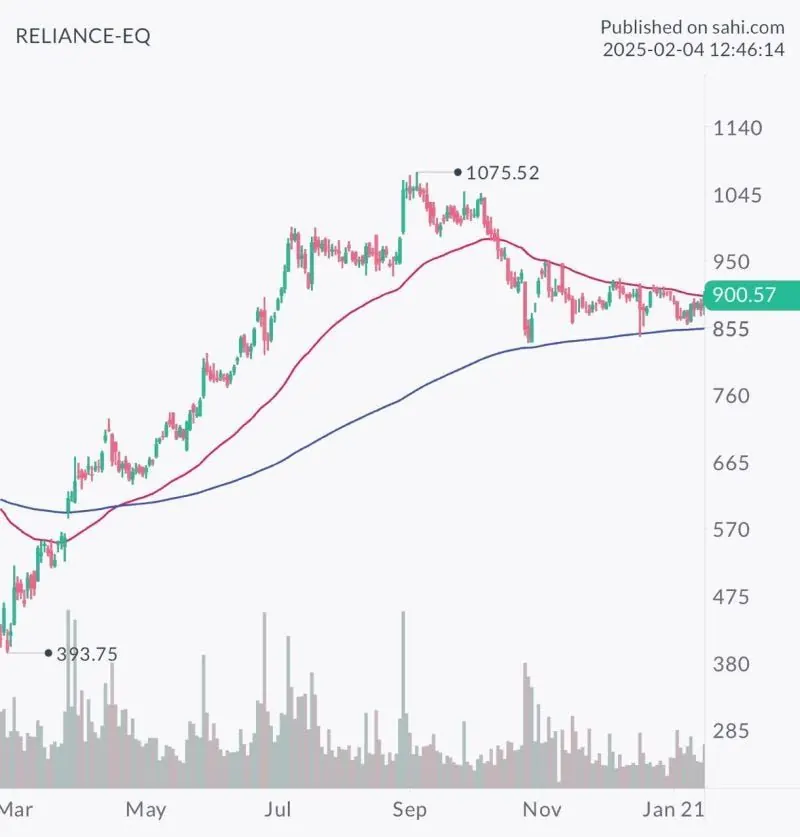
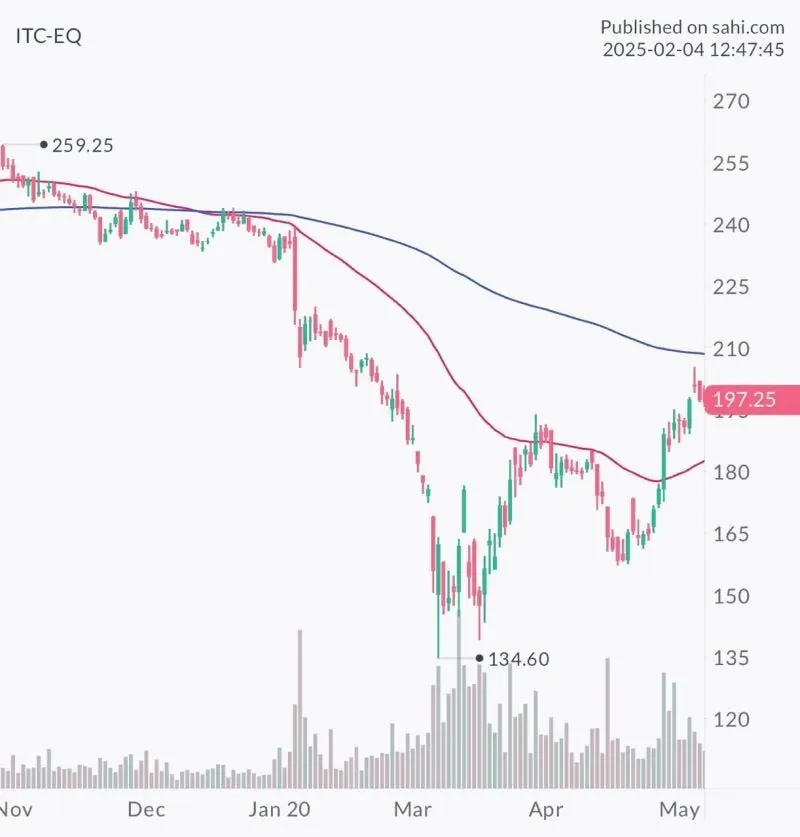
PS: In a recent Sahi.com analysis,
-
Reliance showed a Golden Cross
-
ITC formed a Death Cross
The next time you see a Golden or Death Crossover, will you follow the trend? Or will you look deeper before taking action? Let’s discuss!
Thanks for reading SAHI’s Substack! Subscribe for free to receive new posts and support my work.
Investments in the securities market are subject to market risks. Read all related documents carefully before investing. This post is for learning, not a recommendation.